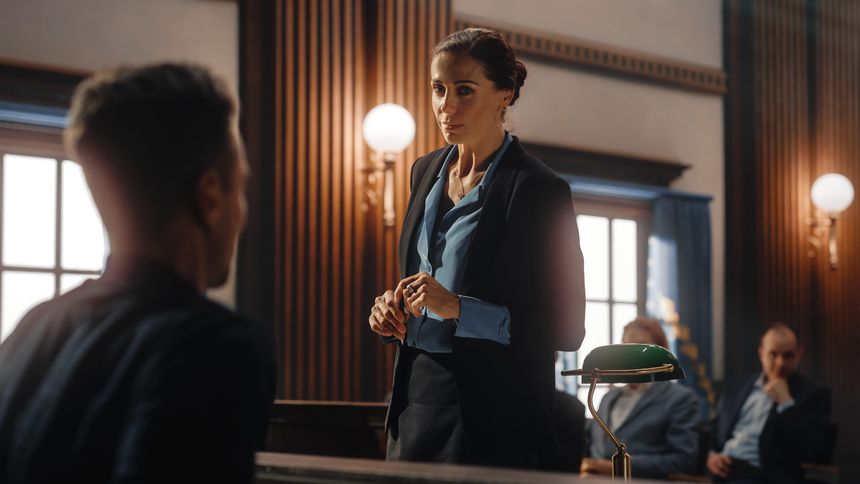
In a recent Law.com article, Skadden attorney Manuel Cachán advises that a prohibition on leading your witness in direct should not mean relinquishing control of that witness. He notes:
Direct examination is not merely the part of trial where the lawyer steps aside and the witness takes over. It is one of the most important forms of advocacy. Yet many lawyers do it poorly, usually because they mistake the rule against leading for a command to relinquish witness control.
Cachán makes the case that the direct examination can still be directed by an attorney who avoids the objection. Conducting a good direct with a prepared witness should be a cooperative project between an attorney who lays out the plan, and an empowered witness who is able to speak for themselves in executing that plan. To supplement Cachán's note, I suggest five principles to follow in direct.
1. Participation: Don't just tell your witness what you'll be asking, create an outline working together with the witness on what needs to be covered, with what level of detail, and in what order.
2. Independence: Make sure your outline is actually an outline and not a script. Nothing destroys a witness's confidence like trying to put words in their mouths. Ask the question during preparation, let the witness answer, then workshop the answer until everyone is satisfied with it.
3. Completeness. The witness isn't there to complete or confirm your thoughts and turn them into evidence. The information should come from the witness in their own words. Ask open-ended questions, while ensuring that your witness understands your goals.
4. Readiness. Even a sophisticated witness is not automatically ready to do that. Reinforce the right messages and the right delivery through practice and repetition. Work on direct as much as you work on cross.
5. Resilience. Beyond direct, your witness needs to be able to withstand challenges. Treat a good direct examination as the foundation for surviving (or even thriving in) a good cross. Note that opposing counsel will be asking about the same subjects, just with a different style. So your witness's home base will always be to return to what they covered in direct.
Direct examination is not a matter solely based on either the counsel's control or on the witness's independence. Rather, a good direct examination should be a cooperative engagement—a smart advocate with an empowered witness.