

Recent headlines allege significant impacts on Western water supplies caused by data center development, but the reality is far more nuanced. While water constraints demand serious consideration in any large-scale development, they also present substantial opportunities for innovation. With the right approach, data center development and water security can advance together.
States across the country are scrutinizing data center water development. California now requires data center owners and operators to disclose expected water use; source of supply; maximum-day, maximum-month, and average-year demand; and annual direct water use by source and cooling type. Utah requires large new data centers to notify water providers, report expected withdrawals, disclose discharge treatment and temperature-adjustment plans, and later report actual withdrawals and conservation efforts. South Dakota requires local water providers to determine whether projected data center water consumption is compatible with local supply before operations begin.
The issue is not just whether a utility will issue a will-serve letter for a data center development. It is whether the supply behind that letter will hold up through drought, growth, curtailment, and competing municipal, agricultural, tribal, environmental, and industrial demands—all of the pressures faced by Western water supplies.
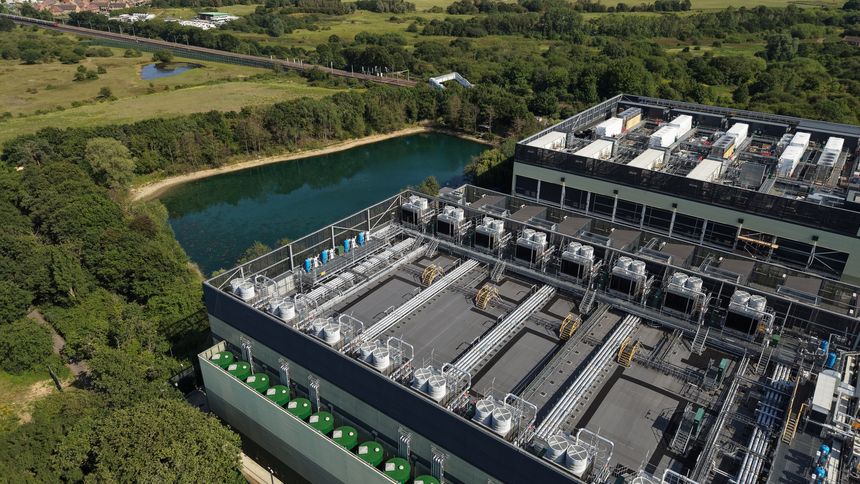
But developers are responding in practical ways. Some are shifting away from high-consumption cooling in arid locations, using dry or closed-loop systems where the tradeoff makes sense. Developers are also considering smaller-scale data centers, which use a fraction of the water and lower overall demand for resources. Another option is using reclaimed water or effluent, including projects where parties have partnered with a reuse utility to use treated water rather than use municipal groundwater or surface water supplies. While there are many benefits to using reclaimed water, there could also be challenges associated with ensuring the quality of the treated water is appropriate for the development's needs, and that there are no other environmental permitting concerns like cross-connection control and impacts to discharge limits.
For continued success, developers need to make water diligence and water-sourcing plans a part of their site selection process, not something they consider after incentives, interconnection, and land control. A complete package should include a water balance, source reliability analysis, wastewater pathway, drought operating plan, and a clear explanation of how the project's design is appropriate in the context of the area's water supply and what innovative measures the project is adopting to protect water resources.
In the West, “available water” has never meant water on paper alone. The strongest projects that thrive despite water supply constraints will be the ones that can plan early, adapt, and work in dry and wet years alike.